Why a Batter Can Leave a Ball Without Losing the Moment
Why a batter can leave a ball: learn how line, length and movement guide a safer choice while keeping the batter ready for the next delivery.

The common mistake is to treat every ball a batter does not hit as a wasted scoring chance. That can cost a wicket: a leave may be the safest active choice when a shot would expose the bat’s edge. Why a batter can leave a ball comes down to its line, length, movement and the scoring options available.
Imagine a hypothetical opening batter facing a right-arm seamer on a dry pitch. A slip cordon and close catcher wait behind the batter, while the bowler aims just outside off stump. The batter’s task is to tell apart a ball worth leaving, one to defend and one to attack.
Read the delivery
In this invented innings, the first ball pitches just outside off stump, rises towards the batter’s front shoulder and carries through to the wicketkeeper. The batter stays balanced and lets it pass. The choice is deliberate: the ball is outside the batter’s chosen line of attack, and its movement makes a late shot risky.
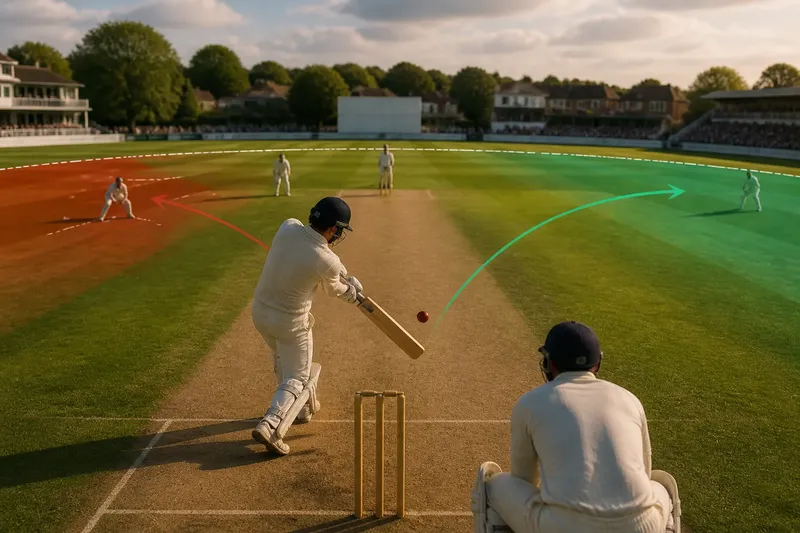
A leave is not just a guess about whether the ball will hit the stumps. The batter also considers their position, movement in the air or off the pitch, and whether contact would allow a controlled shot. A ball can be close enough to threaten the stumps, while a tempting delivery moving away may be hard to hit safely.
Watch the ball all the way to the wicketkeeper. Looking away early gives up information about its bounce, pace and movement. A leave protects the wicket from a risky stroke and helps the batter read what the bowler’s next delivery might do.
Judge line and length
On the next delivery, the bowler repeats the line but pitches the ball fuller. The batter moves forward and defends it with a straight bat. This is a different response to a different length: the fuller ball could threaten the stumps, so a compact defence is safer than letting it pass.
Length means where the ball pitches, and it shapes the time available to judge and play. A short ball may allow the batter to sway or control a pull; a fuller one may call for a forward defence or drive. Line matters too. A ball outside off stump may be left if it is unlikely to draw the batter into contact, but one swinging towards the stumps needs a fresh decision.
Delay commitment until the ball’s path becomes clearer. A small movement of the head and front foot can keep options open; a large early stride or a committed swing can remove them. The aim is not to look passive but to stay balanced enough to choose.
Respond to adjustments
Suppose the bowler sees two leaves and brings the next ball closer to off stump. The batter’s restraint has prompted a change, but it has not dictated the bowler’s response: the bowler might instead pitch fuller, alter the field or keep testing the same line.
Now imagine the bowler sends a fuller ball angling towards the stumps. The batter brings the bat down in time and blocks it. The ball is not scored from, but the batter has avoided reaching for the earlier, wider line and stayed ready for a more direct threat.
A leave can influence the next delivery without being a trick. It shows that the batter will not reach indiscriminately at every ball. The bowler may respond by attacking the stumps, where the batter can defend or score if the ball offers a controlled option. The batter must still read each change rather than leave on autopilot.
When should you leave?
How do you judge the line?
Track the ball from the bowler’s hand and judge where it pitches and passes in relation to the body and stumps. Movement matters too: be more cautious when the ball may drift in than when it appears to hold its line away.
Can a left ball still take a wicket?
Yes. A ball left alone can hit the stumps, and the laws allow other ways a batter may be out. Leaving is a choice about the response that seems safest, not proof that the delivery is harmless.
Why not play at every ball outside off stump?
Reaching away from the body can expose the bat’s edge, especially when the ball is moving. Play when the line and length offer a controlled option, not simply because contact seems possible.
Does leaving waste a scoring chance?
It can, if the ball is easy to hit safely and the match situation calls for a run. But a speculative stroke can turn a low-risk delivery into a chance for the fielding side, so weigh the likely reward against the danger.
Apply the choice
Picture a hypothetical batter on strike with a slip cordon in place. The bowler delivers a ball that pitches outside off stump and moves farther away; the batter sees no controlled scoring shot and leaves it. The next ball is fuller and angles towards the stumps, so the batter defends with a straight bat. The observable result is no run from either delivery, but the batter has avoided chasing the first and protected the stumps against the second.
Use this quick check before committing to a shot:
- Observe whether the ball is likely to pass harmlessly outside the stumps; if so, leave it while watching it through, but if it may turn or swing in, prepare to defend.
- Observe where the ball pitches; if it is full and threatens the stumps, defend or drive only if balanced, but if it is short, stay ready to sway or play a controlled shot.
- Observe whether the ball is moving towards or away from the stumps; if it moves away and draws the bat from the body, leave, but if it comes in, bring the bat into line or move clear only when safe.
- Observe whether your head and front foot are balanced; if they are, choose a controlled shot when one is available, but if they are not, avoid a reaching stroke and recover your position.
- Observe the field and match situation; if a safe scoring option meets the need for a run, take it, but if the stroke exposes an edge or a catch, favour defence or a leave.
- Observe whether the bowler has changed line or length after a leave; if the next ball attacks the stumps, defend or score from it when controlled, but if it repeats the wide line, reassess rather than playing by habit.
It is not worth treating a leave as a performance for the bowler or crowd. A dramatic pose adds nothing, and leaving automatically just to look patient can waste a genuine scoring option. Keep watching, stay ready to play late and reconsider when the line or length changes.
The useful point in why a batter can leave a ball is that restraint keeps options open, but only when paired with attention. A leave earns its value when the batter is prepared for the next delivery and ready to change the decision as soon as the ball’s path demands it.