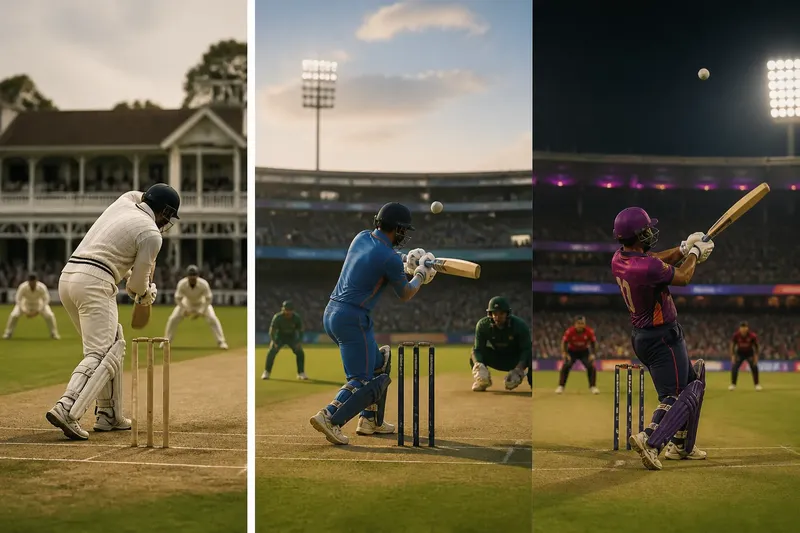
The Boundary Rope and the Shape of a Cricket Ground
Learn how a cricket ground’s boundary shape affects shot choices and field placements, so you can read the rope as part of the match’s tactics.
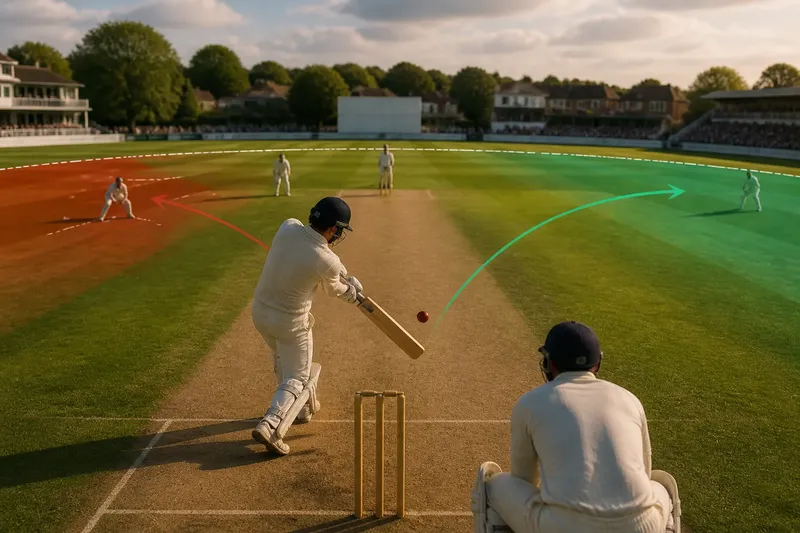
The common mistake when reading a cricket ground is to treat the boundary rope as a neat, even circle. That can make a pulled shot to one side seem equivalent to a lofted drive to another, even when their distances, angles and fielders’ routes differ. The boundary rope marks the edge of play, but its shape also influences the choices available to batter and fielding side.
What the rope marks
In a match, the boundary is the defined edge of the playing area. A rope, line or other visible marker makes that edge easier to judge; the precise arrangements depend on the ground and match conditions. The marked boundary is not simply the edge of the grass or the furthest point a fielder can reach. Whether a ball has crossed the boundary is judged under the applicable laws and playing conditions.
Notice the rope in relation to the pitch, not in isolation. A central pitch can leave one side relatively close and another noticeably deeper. A ground may also have straight sections, angled corners or an irregular curve, particularly where buildings, sight screens or other fixed features constrain the available space.
Those features shape the choices available to both sides. Batters look for scoring directions that suit their shots and the field. Fielders arrange themselves to cover likely strokes and protect accessible scoring areas. Neither side can change the boundary during play to suit a preferred tactic.
Three boundary shapes
Near-circular grounds
A roughly circular boundary gives a broadly similar distance around the pitch, though straight and square dimensions may still differ. Batters can target several parts of the field, while captains can spread fielders without one side becoming an obvious short route to the rope.
“Roughly” matters. The pitch is rectangular, and a batter’s position, handedness and shot direction make the same curved boundary look different from different points. A circular outline does not mean every hit travels the same distance.
Oval or stretched grounds
An oval boundary has a longer axis and a shorter one. Depending on how the pitch sits, straight shots at one end may carry further than strokes square of the wicket, or the reverse. Batters may target the shorter arc; fielders may respond by protecting it and inviting shots towards the deeper side.
The longer boundary can become part of the fielding side’s plan, but the shorter side still needs defending. A batter does not need to hit harder to use a favourable angle: finding space and choosing the right stroke can matter more than raw force.
Uneven or asymmetrical grounds
An asymmetrical ground has different boundary distances or angles in several directions. One side may be short behind square, while the straight boundary is deep and the opposite square side falls somewhere between. A useful scoring area may be specific rather than simply “straight” or “square”.
For fielders, irregular edges complicate coverage. A boundary rider positioned well for one batter’s natural stroke may be less useful against a different angle or a change of strike. The captain has to weigh where a likely shot could go against the space left open elsewhere.
How shape changes play
Boundary distance is only part of the picture. The angle between the batter, the ball’s likely path and the rope affects whether an attacking option looks safe. Turning a ball towards a short square boundary involves a different calculation from driving towards a deeper section, even if both shots look equally forceful.
Fielding positions reveal how a side reads that geometry. A fielder close to the rope may be stationed where a boundary is easiest to reach. Another may stand in a gap where the ball is likely to pass, ready to stop it before it reaches the edge. The placement can show which stroke the captain is prepared to concede and which one the side is trying to discourage.
Imagine an invented ground with a short leg-side boundary and a deep off-side arc. A right-handed batter has a gap in front of square on the leg side, while a boundary rider waits near the rope. The batter chooses a controlled placement into the gap rather than a lofted hit. Watch whether the ball reaches open grass or the fielder cuts it off; that result shows how shot direction, available space and field placement interact.
Reading the ground from the pitch?
How can I tell which side is shorter?
Use the pitch as your reference point and compare the visible rope on either side, rather than judging from the grandstand alone. Broadcast graphics or ground diagrams can help, but the view from the batter’s position matters for the shot being played.
Does a shorter boundary always favour the batter?
A shorter route can make a boundary easier to reach, but the fielding side may place a fielder there or bowl a line that makes the shot awkward. The batter still has to judge the ball and the risk of being caught or stopped.
Why do fielders stand near the rope?
A boundary fielder can intercept a ball travelling through a dangerous scoring area and may turn a boundary into a smaller score. That position leaves other parts of the field less protected, so it signals a choice rather than complete coverage.
Can the rope move during a match?
The boundary must be properly defined for play, but its arrangement is set by the ground and match conditions, not a batter’s preference. If its status or placement is unclear, the competition’s playing conditions and officials’ decisions govern it.
Comparing ground shapes
When comparing two grounds, avoid calling one “short” without saying where. Compare straight, square and behind-square areas relative to the pitch. That gives a clearer account of the shape and explains why a player might favour one stroke direction over another.
Use this viewing routine to make the geometry easier to follow:
- Check where the centre pitch and the main straight sight lines are; if they are clear, use them as your reference, but if the camera angle hides them, consult a ground diagram.
- Compare the rope on the two sides of the pitch; if one side looks closer from a comparable view, note that direction, but if perspective makes the view uncertain, avoid calling it shorter.
- Look for corners or curved sections that interrupt a regular oval; if you can see them, note which shot directions they affect, but if they are obscured, describe the outline as unclear.
- Check where boundary fielders stand and which gaps remain open; if a fielder protects a short arc, watch for shots elsewhere, but if the field is changing, reassess after each adjustment.
- Watch whether batters alter their shot direction as the field changes; if they target an open area, note the tactical response, but if the ball dictates a different stroke, do not assume the boundary alone explains the choice.
- Compare the same directions from the pitch rather than from different camera angles; if the views are consistent, describe the contrast, but if they are not, rely on a diagram or leave the distance comparison unresolved.
Say you are watching an invented match on an oval ground. From a clear camera view, you note that the rope appears closer on the leg side and a fielder is stationed near it; the off-side gap is open. When the batter receives a ball suitable for a shot through that gap, you watch the direction chosen and whether a fielder cuts it off. The useful answer is not that the whole ground favours batting, but that the visible field leaves a particular route open for that delivery.
A detailed diagram is more useful when comparing venues carefully or explaining field placement to someone else. It is not worth trying to infer exact distances from a camera angle: perspective can make a far boundary look close and a near boundary look broad.
Use the rope as a map
Use the boundary rope as a map, not just a scoring line. Locate the pitch, compare the available arcs, and check how the fielding side responds. This gives you a practical way to read a cricket ground’s shape: ask which direction offers space, which asks for a riskier shot, and how the rope changes that choice.
The same method works when the boundary is irregular or the camera view is limited. You do not need to decide that a whole ground favours batting or bowling; identify the particular angle that matters for the next delivery. That small shift turns the rope from scenery into useful information about the play.