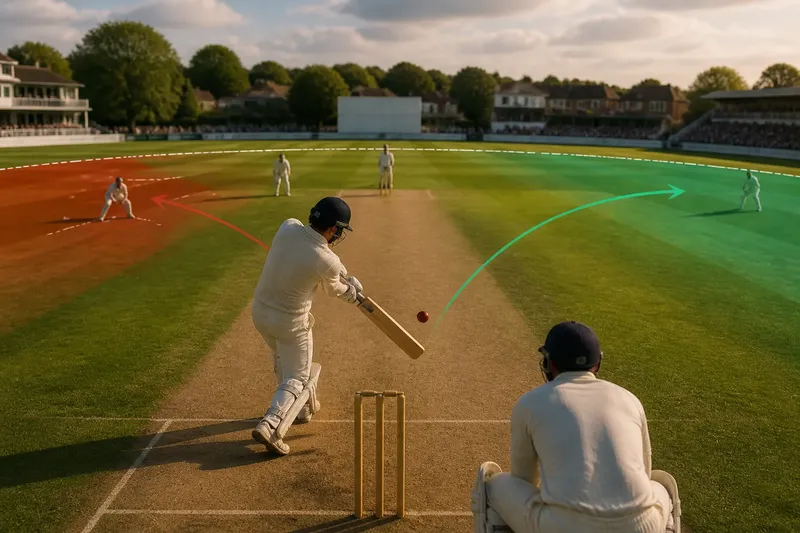
Test, One-Day and T20: What Changes When the Clock Changes?
Test, One-Day and T20 cricket reward different priorities. See how innings limits and time change batting, bowling and fielding decisions in the same situation.
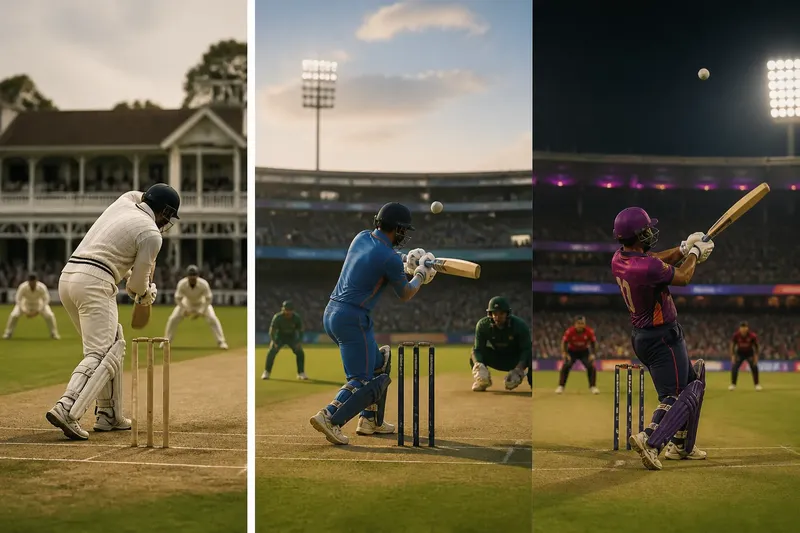
The common mistake when comparing Test, One-Day and T20 cricket is to treat a run or a wicket as having the same value in every format. That can make a sensible choice look timid in one match and reckless in another. The clock matters, but so does how many innings each side has and whether a total must be chased before a fixed limit.
Test, One-Day and T20 cricket all use familiar skills, yet the available time changes what a team can afford to attempt. Follow one match situation through all three formats and the difference becomes clear: a side protecting a lead, setting a target or chasing one has distinct priorities.
Time and innings
A Test match allows each side two innings, and play is scheduled across several days. A team can declare an innings closed, but it still has to take twenty wickets to dismiss its opponents twice. The match can end in a win, a draw or a tie. Time is not an instruction to bat slowly; it is room to build an innings, recover from a difficult passage and plan for another turn at the crease.
In a One-Day International, each side normally has one innings with a limit of fifty overs. T20 cricket also gives each side one innings, with a limit of twenty overs. In both limited-overs formats, the innings limit makes the remaining balls a visible resource. A team cannot simply wait for a later innings to make up a shortfall.
Overs are sets of six legal deliveries. A wide or no-ball does not count towards the over, though it affects the score and may bring an extra delivery. The clock therefore means more than minutes on a broadcast schedule: it includes the legal balls available, wickets in hand and the innings still to come.
One situation, three plans
Imagine a side has lost early wickets while batting first, and a capable batter has just arrived. In a Test, the immediate aim may be to stop the collapse, protect the newcomer from unnecessary risk and keep the innings alive. Runs still matter, but there may be time to rebuild before accelerating later. If the match is near its end, however, the same side may need to score quickly to create time to dismiss the opposition.
In a One-Day innings, the team must balance recovery with the fixed overs ahead. A partnership that steadies the score is useful, but using too many balls without scoring can leave the later batters with an awkward workload. The batter might first choose safer scoring options, then look for gaps and boundary chances as the innings develops. The plan depends on wickets remaining and the target or total in view.
In T20, the same early loss leaves fewer balls for a gradual rebuild. That does not mean every delivery calls for a big shot. A batter may rotate the strike, choose a favourable bowler to attack and keep the innings moving, while accepting that a cautious spell has a greater cost when the limit is short. The team’s choice is shaped by the immediate match position, not by a rule that T20 must always be played wildly.
Batting across an innings
In Tests, batters can often divide an innings into phases: get established, build a partnership, then score more freely when conditions and the match situation invite it. A long innings can wear down bowlers and influence the time left for the other side. A declaration can end the innings before every available run has been taken if the captain wants more time to bowl the opposition out.
One-Day batting is a negotiation between preservation and scoring throughout a capped innings. A team may value wickets early because they support a stronger finish, yet waiting too long to lift the rate can make the later task difficult. Partnerships help because they keep options open: settled batters can score without asking a new arrival to take immediate risks.
T20 compresses those choices. Batters often seek scoring options from the start, but they still assess the field, bowler and match situation. A boundary is valuable, while a wicket can disrupt the next batter’s plans. The best decision may be a single that keeps a strong batter on strike, or a forceful shot if the innings is running short on scoring opportunities.
Bowling and fielding choices
Test bowlers can work a batter over with changes of line, length and angle, using time to create pressure and invite an error. Captains may keep a close catcher in place if a chance is more useful than a quick run saved. But if the match is drawing towards its end, a defensive field that allows easy singles may cost the bowling side the time it needs to take wickets.
In limited-overs cricket, bowlers and captains must manage a finite set of overs. A team may use a bowler’s strongest overs when a particular batter is at the crease, or save them for a phase when wickets are especially valuable. Fielders may protect likely boundary areas, but that can leave room for singles. The choice is a trade: restrict the most damaging scoring option, or spread the field to make rotation harder.
In T20, each over has a sharper effect on the remaining innings because the total supply is shorter. A captain might turn to a spin bowler to change the pace of scoring, or use a quick bowler when a batter is seeking a boundary. These are options, not fixed format rules; pitch conditions, the batters at the crease and the match situation still matter.
Reading the match position
For a Test, ask how much time remains, how many wickets each side still needs to take and whether a draw is an acceptable result. A team batting with a lead may value time at the crease as much as extra runs. A side chasing a target may need to judge whether the available time allows a win without exposing batters to needless risk.
For a One-Day match, check the target or current total, the overs left and wickets remaining. If the chase is slipping behind the required scoring pace, the batters may need to take more chances; if wickets are falling, preserving a partnership can matter more. In a T20 chase, the same questions apply, but the short innings makes each quiet passage more consequential.
Say you are watching a chase in which the batting side has a set target and two established batters at the crease. If the required pace is manageable, they might keep taking singles and reserve bigger shots for deliveries they can favour. If the same pair were in a Test match with ample time and no immediate need to force a result, they could instead prioritise batting through the session. The visible difference is not simply shot choice: it is how each format prices time and risk.
Questions about formats?
Why can a Test match end in a draw?
A Test has no fixed number of overs for each innings, but it has a scheduled playing period. If neither side completes the conditions for a win before time runs out, the result can be a draw.
Does a limited-overs team have to attack every ball?
No. Batters can defend, take singles or wait for a better scoring option. They must still account for the innings limit, so leaving too many balls unused can narrow the choices later.
Why does a declaration matter in a Test?
A declaration closes the batting side’s innings while it still has batters available. A captain may use it to give the opposition a target and leave enough time to try to take all ten wickets.
Is a faster scoring rate always better?
Only in relation to the match situation. A rapid rate can help set a strong limited-overs total or chase a target, but losing wickets can undermine that plan; in a Test, a slower rate may be useful if batting time is the priority.
What to ignore
It is not worth judging a player’s approach by a single shot or comparing a Test strike rate directly with a T20 one. Those clues leave out the target, wickets in hand, innings limit and time remaining. Watch how the plan changes as those conditions change, and the same player’s choices become easier to read.
When you next watch Test, One-Day or T20 cricket, note the innings structure first, then ask what the batting side needs from its remaining time and wickets. That simple check explains why patience can be purposeful in one match and costly in another.